

How to Choose the Right Kt Tape
Know what you're trying to accomplish before you buy. KT tape is for unloading muscles, reducing pain, and improving proprioception — not for stopping a joint from moving. If you have a completely unstable knee or a torn ligament, buy a brace; KT tape is for strains, tendon pain, and managing load during play.
Good kinesiology tape mimics skin stretch so it moves with you and provides gentle recoil to offload tissue. Look for tapes that advertise "skin-like" stretch (roughly 30–40% extension) — too rigid and you lose the point, too stretchy and you get no support. The right stretch gives lift to the skin and helps with circulation and proprioceptive feedback without strangling the area.
Table of Contents
Our Top Picks
Affiliate disclosure: if you buy through these links, we may earn a commission at no extra cost to you.


Factors to Consider
Match the tape to the problem — support vs. immobilization
Elasticity and recoil — how much stretch matters
Adhesive quality and sweat resistance
Adhesive is where tapes fail first in real sports: pick a tape with a strong acrylic adhesive and a reputation for staying put through sweat and short swims. Hypoallergenic or medical-grade adhesives are worth it if you have sensitive skin — still do a patch test. Expect 3–5 days of wear under normal sport conditions; anything that peels after a single practice is junk.
Size and format — rolls vs. pre-cut strips
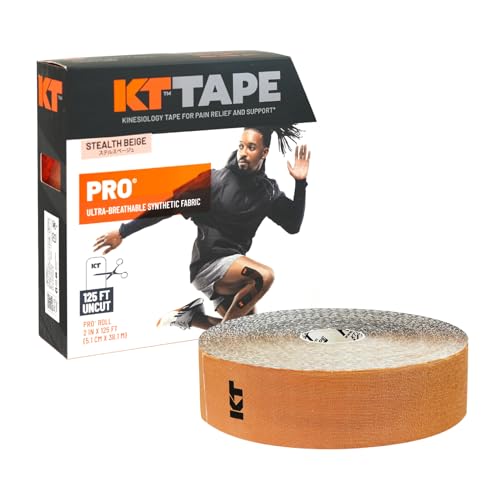
Buy a roll if you want custom applications and economy; buy pre-cut strips for quick, consistent taping for common problems like knees or shoulders. Width matters: 1" is better for ankles and smaller joints, 2" for knees, backs, and larger muscles. Also check length — long rolls let you tape full hamstrings or calves without seams.
Fit, application complexity, and pairing with other gear
Consider how much time and skill you'll invest. If you don't want to learn complex patterns, choose pre-cut shapes or combine tape with a compression sleeve for easy support. Remember: KT tape complements sleeves and braces but doesn't replace them when mechanical stability is required.
Frequently Asked Questions
How long can I leave KT tape on?
Plan on wearing it 3–5 days for most brands — it’s designed to survive sweat and showers. If the edges start peeling, or your skin reacts, take it off earlier; reapply after skin has rested for at least 24 hours if needed.
Will KT tape stop my ACL from tearing?
No. KT tape won't prevent a ligament rupture or replace a functional brace for instability. It can help with proprioception and pain control, but for serious ligament issues you need a proper brace and a clinician’s plan.
Is KT tape waterproof? Can I shower or swim with it?
Most quality tapes tolerate showers and short swims, but prolonged soaking and chlorinated pools will shorten wear time and lift edges. Pat the tape dry after swimming and expect to replace it sooner than you would after dry activity.
How tight should I apply the tape?
Not tight like an ACE wrap. Anchor the ends with no stretch and use moderate stretch only where you want recoil; it should never cut off circulation or feel numb. If you see swelling, numbness, or extreme color change, remove it immediately.
Can KT tape irritate my skin?
Yes — adhesive reactions happen. Do a 15–30 minute patch test before a full application, use hypoallergenic tape if you have sensitive skin, and clean and dry the area before applying to reduce issues.
Should I use pre-cut strips or a roll?
Pre-cuts are fast and repeatable, ideal for athletes who tape the same area often. Rolls give you customization and better value for larger coverage or variable taping patterns; choose based on your injury and taping skill.
Can I use KT tape with compression sleeves or braces?
Yes — KT tape works well under or over a sleeve to add targeted support without bulk. Be cautious about stacking compression that could impede circulation; if you use both, check circulation and comfort during activity.
Conclusion
KT tape is a tool, not a miracle. Pick a tape with the right stretch, strong adhesive, and the right format for your injury — and use it to manage load and improve proprioception, not to replace braces or rehab. Recommendation: buy a quality roll plus a pack of pre-cuts if you train regularly; this combo fits athletes treating tendon pain, strains, or needing on-field pain control.


